Understanding Dark Leadership: Insights from a Webinar with Dr. Sinem Bulkan and Professor Malcolm Higgs
Some insights and reflections on Dark Leadership.
3/19/20263 min read
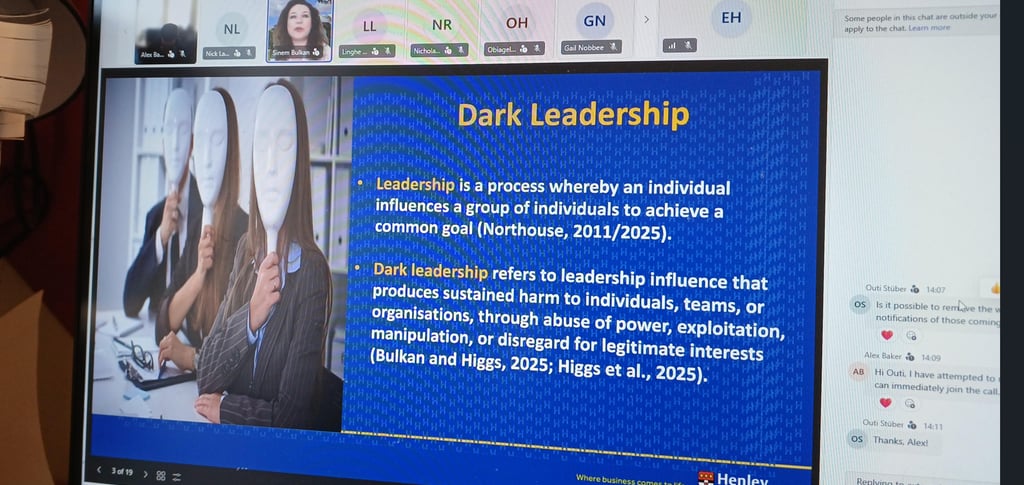
In some recent research projects we’ve been working with human rights practitioners to understand what leadership means in a human rights context. One recurring theme is the stark contrast between ‘good’ and ‘bad’ leadership, how these are experienced and their impact on organisations.
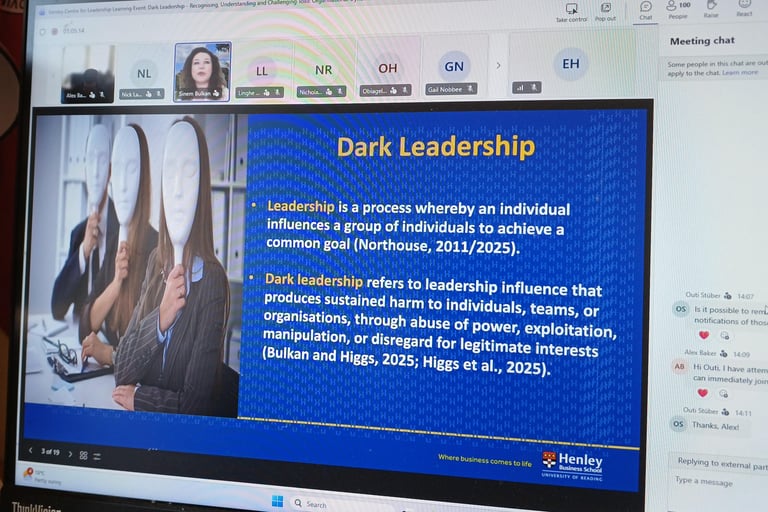
Yesterday I attended an excellent webinar on 'Dark Leadership' from Henley Centre for Leadership, delivered academics Sinem Bulkan and Malcolm Higgs and which brought these reflections into sharp focus. Their discussion on ‘Dark Leadership’ explored the toxic traits and practices that can lead to positive short-term organisational outcomes while causing long-term systemic rot. Their presentation relates to a recent book of theirs on the topic called Dark Leadership, which focuses on navigating toxic organisations and transformational change.
In working with human rights practitioners, we’ve heard how such ‘dark traits’ create a ripple effect of dysfunction, starting at the top and permeating every level of an organisation.
Technical proficiency vs moral excellence
One interesting distinction I’m exploring through the lens of NeoAristotelian virtue ethics is the gap between an institution and the human rights ‘practice’ it is meant to sustain. Technical proficiency, such as when a leader or practitioner is a brilliant litigator is celebrated. However, if that same person treats colleagues as mere instruments, lacks honesty, or lacks temperament, they undermine the internal ‘goods’ of that practice. In trying to connect virtue ethics and leadership, human rights leadership looks like much more than the delivery of external, socially beneficial goods, such as the freeing of a political prisoner; it’s about the qualities of character like honesty, courage and temperance that hold together the socially cooperative basis of a given practice.
Unmasking dark leadership
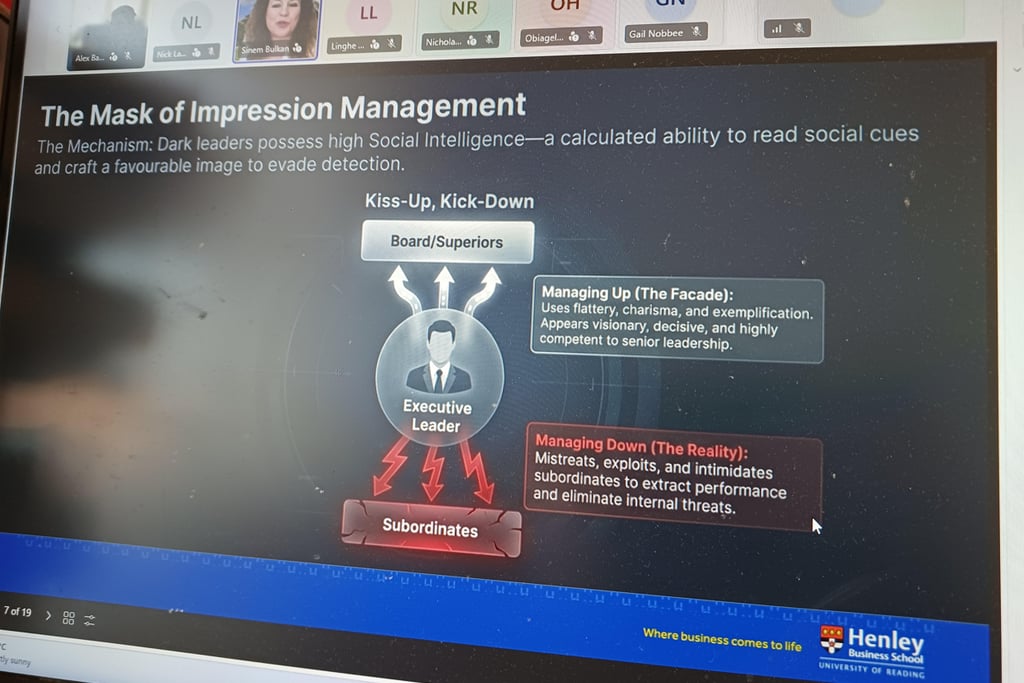
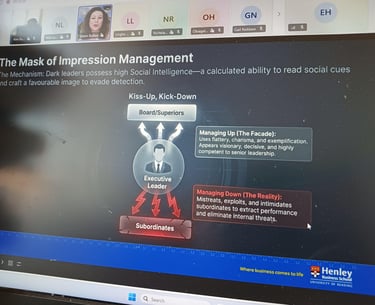
A particularly interesting slide from the webinar which gave pause to reflect was Sinem Bulkan’s ‘Mask of Impression Management.’ It acted as a reminder of what Oliver James wrote back in 2013 about how easily those with narcissistic or machiavellian traits can hoodwink an organisation and ascend to power before their toxicity is realised. In this respect, one of the marks of a ‘good leader’ is likely to include the quality of character required to recognise and respond to these dark traits in others before they jeopardise the practice. In a sector where human rights practices face external threats to security and political space, there is also a real risk of internal vulnerability caused by leaders who crave power for its own sake.
Dealing with dark leaders
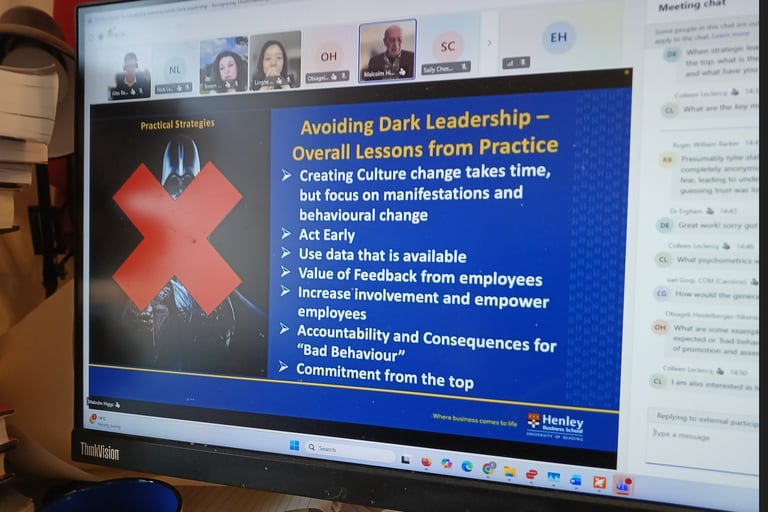
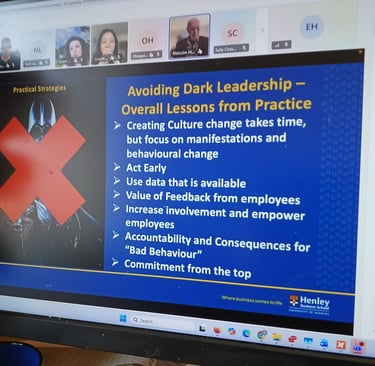
Malcolm Higgs’ discussion of the two cases of responses to dark leadership and lessons learned were essential listening. What’s needed?
✅There must be commitment from those at the highest levels for dealing with dark behaviour.
✅Acting early is essential for presenting toxic cultures from taking root.
✅Hold people to account.
✅Leadership coaching and training may play a useful role.
✅Utilising psychometric tools and 360-feedback and incorporating these into incentive structures/promotion is essential. Use should be made of existing organisational data too.
✅Dark leaders thrive where power is concentrated. Dispersing power can help mitigate the rise of toxic figures who are drawn to where it is concentrated.
I’m looking forward to reading Bulkan and Higgs’ book, as a useful aid as this project develops and as a resource for supporting coachees to interrogate values and navitage tensions.
Slides published here with permission from Sinem Bulkan and Malcolm Higgs.
Slide published here with permission from Sinem Bulkan and Malcolm Higgs.
Slides published here with permission from Sinem Bulkan and Malcolm Higgs.