What I'm reading now: The Inside Story' by Katharine St John Brooks and Julia Duncan
3/22/20263 min read
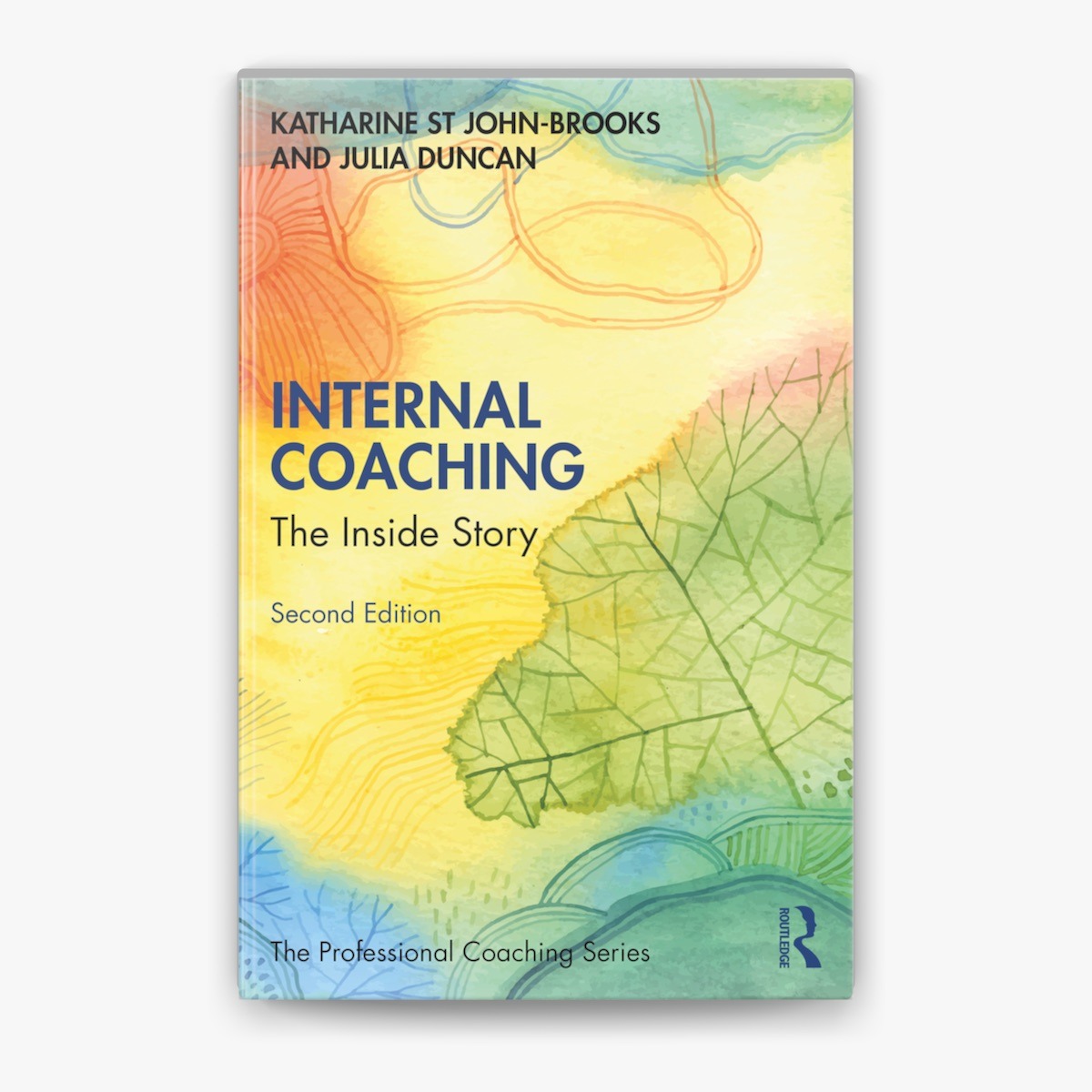
I was lucky enough to acquire a copy of this excellent book when I attended an AoEC webinar featuring Katharine St John Brooks. It's the second and updated edition of Internal Coaching: The Inside Story and is co-authored with Julia Duncan. As an updated edition, it takes stock of the changing landscape of coaching over the past few years, particularly post-pandemic, and it on draws on new research published since the first edition. It also draws on research undertaken by the authors. After carrying this signed copy into our latest internal coaching pool meeting, our lead decided to put a copy on order.
A book for practitioners and organisations
The book is split into two halves: What internal coaches need to know and What organisations need to know. It is also written with multiple audiences in mind. These audiences are coaches themselves or those thinking about joining a pool; and those within organisations who are managing internal schemes or are thinking about rolling one out. As an external coach entering an internal pool for the first time, I initially thought Part 1 would be my main focus. But Part 2 ended up being essential reading for understanding the broader contexts for internal coaching, which includes structures of support, and the need for coaching strategy and framework for driving pool success. The book also gives a good amount of attention across both parts to team coaching, which will be useful for those working in this growing space. For the individual reader, each chapter ends with a useful set of questions for the reader to take away and reflect on.
Overall it’s very well researched and evidence-based – and this is presented through accessible vignettes, quotations and reflections. The book provides a strong sense of what good practice looks like and it provides many insights and gems (for example, how renaming the internal coaching pool to ‘leadership academy’ might lend the scheme a greater sense of prestige and gravitas.
Part 1: What internal coaches need to know
Part 1 covers the practice of internal coaching that includes sections on the individual benefits of becoming an internal coach. I was pleased to read how coaches identify being a part of something bigger, personal growth and learning among the benefits, which were my main motivations for joining. However, these may also bring friction: internal coaches have to manage their day job alongside their coaching for example, and they face some unique challenges that come from being part of the same system.
The standout for me was the chapter on ethics. Brooks and Duncan highlight how internal coaches often face more frequent ethical dilemmas than external ones. Many examples are given of the kinds of dilemmas that arise and how they might be addressed in practice. For example, during “chemistry sessions” I’ve now found myself surveying potential mutual connections within the organisation and explaining to the client why we do this. The book’s treatment of ethical maturity resonated with some work I’m doing at the moment on virtue ethics and leadership. We have the ethical codes provided by the main coaching bodies like the EMCC and the ICF which are incredibly important as a compliance measure. But it’s easy to reduce ethics to algorithmic rule-following, especially for new coaches. The authors quote Roger Steare:
“Too many rules make us lazy in taking responsibility for our own actions.”
As the book indicates, experience is important for developing ethical maturity and this allows us to navigate the grey areas that rules can’t cover. It’s great to see the authors survey the diverse landscape of normative ethics here and what these mean for coaching.
Part 2: What organisations need to know
The second part begins by making a compelling case for the internal pool: besides lower cost, there is the ‘multiplier effect’ for individual coaches that include improved personal skills, listening, and confidence; its contribution to organisational learning and the development of a coaching culture within the organisation. One of the surprises I had in becoming a coach was that I could suddenly see before me how well-intentioned staff frequently shut down or close off the resourcefulness and creativity of their colleagues. An internal coaching program may feature as a useful counter-pressure to this habit, and within a broader cultural shift where coaching practices and coaching-based leadership is becoming more valued within organisations.
I especially enjoyed the chapter on supervision, which is undervalued in the coaching world generally. The chapter makes a strong case for robust supervision and outlines the range of supervision approaches (internal/external, group, 1-to-1 etc.) and their benefits and challenges and the importance of CPD.
Final thoughts
This is an essential evidence-based resource for internal coaches and organisations. I can see the book being an important resource for helping shape conversations within internal coaching schemes about good practice and future directions. As a new internal coach, it is helping inform and shape my practice in important ways and I look forward to discussing it in our coaching pool.